
Our History
1818
-
1843
1818–1843: Early Beginnings
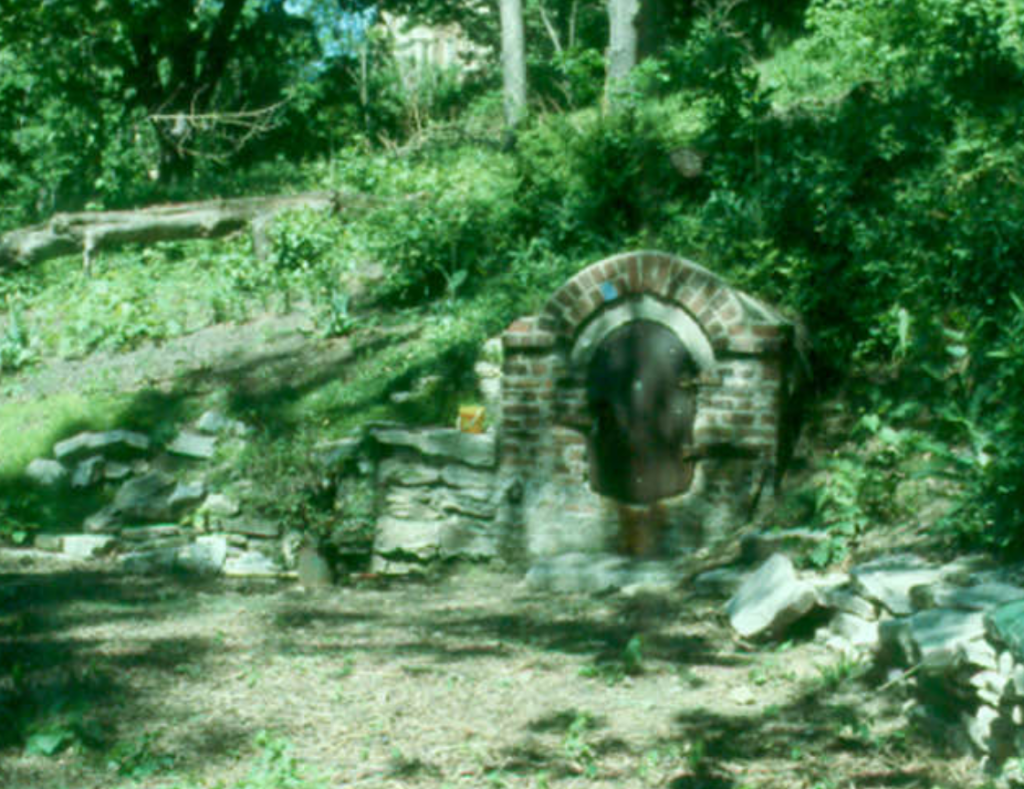
In 1818, Augustus O. Garrett received a federal land patent under President James Monroe for property that would later include Peoria Mineral Springs.
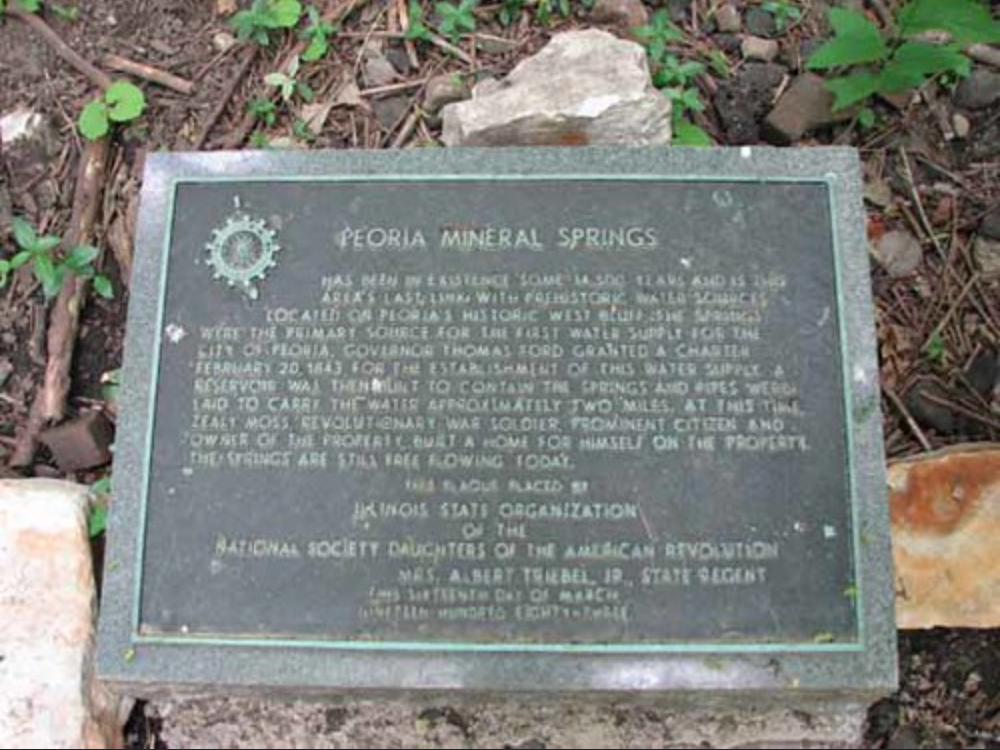
By 1833, the city had contracted to supply spring water from the West Bluff to Peoria’s public square. In the years that followed, a vaulted brick reservoir was constructed at the site, recognized as one of the city’s earliest public water utilities and commonly known as the Peoria Water Works.
In 1840, Garrett deeded the property, then called Spring Hill, to Captain William S. Moss. Three years later, in 1843, Moss constructed the brick home that still stands at the base of the spring, a lasting landmark of Peoria’s earliest development.
1847–1872: The Bradley Family Era
In 1847, Lydia Moss Bradley, founder of Bradley University and sister of William S. Moss, acquired control of portions of the land surrounding the spring. A dedicated pipeline from the spring supplied water to the new Bradley Estate, reflecting the spring’s continued importance to the area’s early development .
By 1856, her husband, Tobias Bradley, transferred operational rights to Ransom Hickey, who became the first to commercially bottle the water through the R. Hickey Bottling Works. His products included beverages such as Peach Cider and Lithia Seltzer, introducing the spring’s water to a wider public.
When Hickey passed away in 1872, control of the property returned to Lydia Moss Bradley, ensuring the family’s continued stewardship of the historic spring.
1847
-
1872
1892
1892: Peoria Mineral Springs is Born
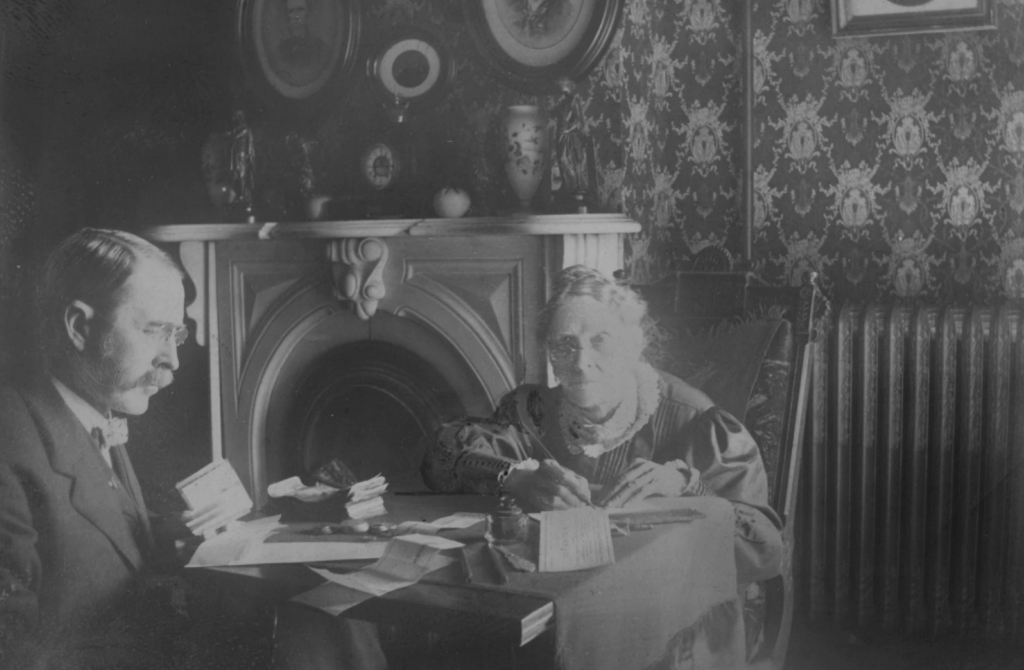
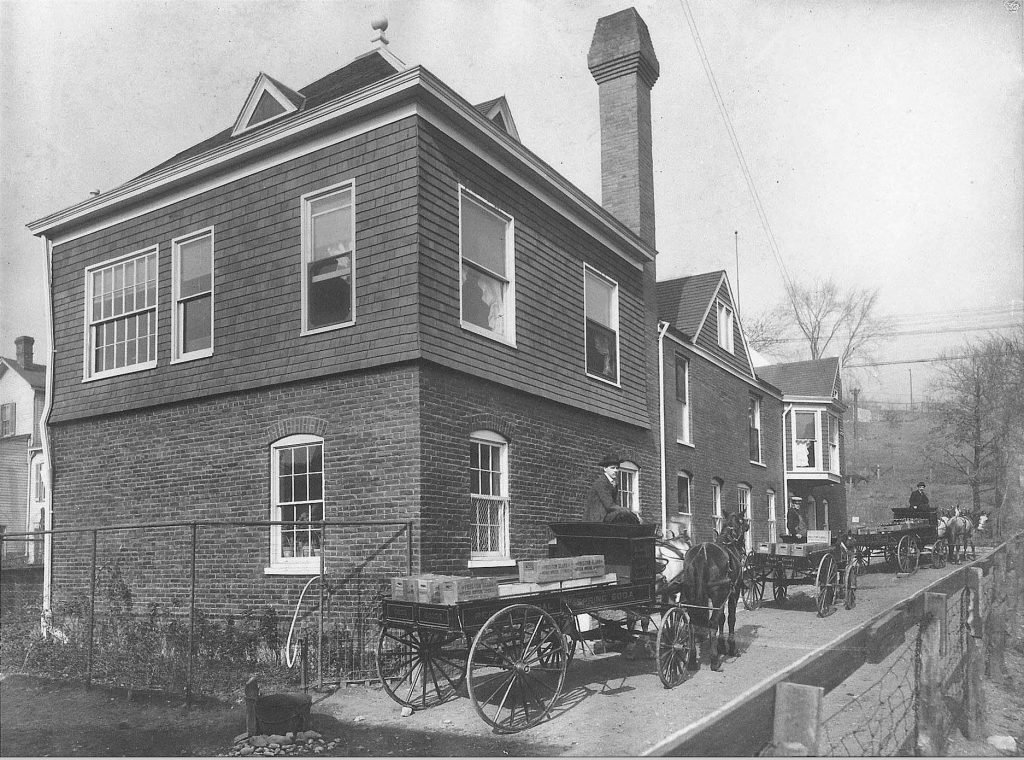
In 1892, Lydia Moss Bradley sold the mineral springs property and associated rights to Preston Clark. Clark secured legal rights to the name Peoria Mineral Springs and expanded the site into a thriving bottling enterprise.
At the same time, Peoria was gaining national recognition as the “Whiskey Capital of the World,” and this pure mineral water emerged as a distinguished alternative, offering balance and refinement within a rapidly industrializing city.
1969–1976: A Family Revival
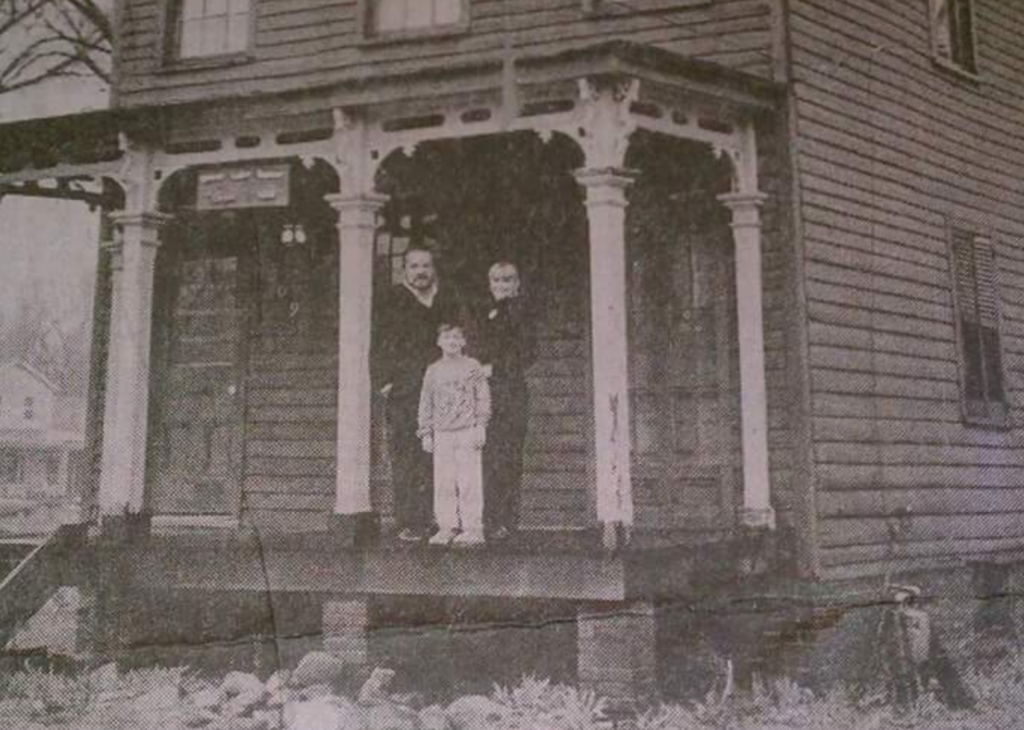
In 1969, Charles and Joy Traynor encountered the long-neglected Moss house at the springs and stepped in to prevent its demolition. They restored the historic federal-style home and, by 1973, had acquired the mineral springs property itself, clearing accumulated gravel and carefully reestablishing the natural water flow.
By 1976, Peoria Mineral Springs, Inc. was officially established. Bottling resumed on site, and the spring once again became an active part of the community, marking the beginning of its modern revival and renewed stewardship.
1969
-
1976
1982
-
1989
1982–1989: Recognition and Growth
In 1982, Peoria Mineral Springs earned a place on the National Register of Historic Places, a national recognition that underscored its cultural and historical importance.
From 1988 to 1989, a partnership with Koala, a Beecham Pharmaceuticals company, supported expanded water distribution through the construction of a new pipeline and well. While the collaboration was brief, it marked a period of renewed investment and interest, adding a distinct chapter to the spring’s enduring legacy.
2010–Present Day
In 2010, Tobias T. Traynor, son of Joy and Charles Traynor Jr., became the owner of the original William S. Moss home, the historic spring, and the surrounding property. Today, he carries forward a legacy more than a century in the making, serving as both owner and steward of Peoria Mineral Springs.
From this rare and ancient source, true mineral water rises freely from deep limestone aquifers, gravity-fed to the surface, then bottled at the source using simple, standard handling to preserve its natural character. With every jug filled, a tradition of purity, history, and place endures, offering a direct connection to one of America’s most historic natural springs.
2010
-
Present
